
How to Create Effective Behavior Plans at Home: A Parent’s Guide to Applied Behavior Analysis
Imagine you’re sitting in the kitchen late one evening, feeling exhausted after another challenging day spent managing your child’s behavior. Your son is 8 years old and has autism spectrum disorder (ASD), which comes with its own unique set of behavioral challenges. Despite trying various strategies from books and online forums, nothing seems to work consistently, leaving you frustrated and unsure about how to proceed.
If this scenario sounds familiar, you’re not alone. Many parents find themselves in a similar situation when it comes to managing their child’s behavior at home. But there is hope. Applied Behavior Analysis (ABA) offers a structured approach that can help create effective behavior plans tailored specifically for your child’s needs.
In this guide, I’ll walk you through the steps of creating a behavior plan at home based on ABA principles and share real-world tips from my experience as a licensed Board Certified Behavior Analyst (BCBA).
What is a Behavior Plan and Why It Matters
A behavior plan is a structured intervention designed to address specific behavioral issues in children. When implemented correctly, it can significantly improve the quality of life for both your child and your family. The key elements of an effective behavior plan are:
- Target Behaviors: Clearly defined behaviors you want to change.
- Baseline Data: Information about how often these behaviors occur naturally before any intervention is applied.
- Strategies Based on Function: Techniques that target the underlying reason for the behavior, rather than just addressing its surface appearance.
- Measurable Goals: Specific objectives you aim to achieve through consistent application of your strategies.
Creating a well-thought-out plan based on ABA principles can help reduce problematic behaviors and foster positive changes in your child’s daily life. It also provides a framework that allows for adjustments over time, ensuring the plan remains effective as your child grows and changes. Learning about functional behavior assessments in autism can deepen your understanding of why behaviors occur and how to address them systematically.
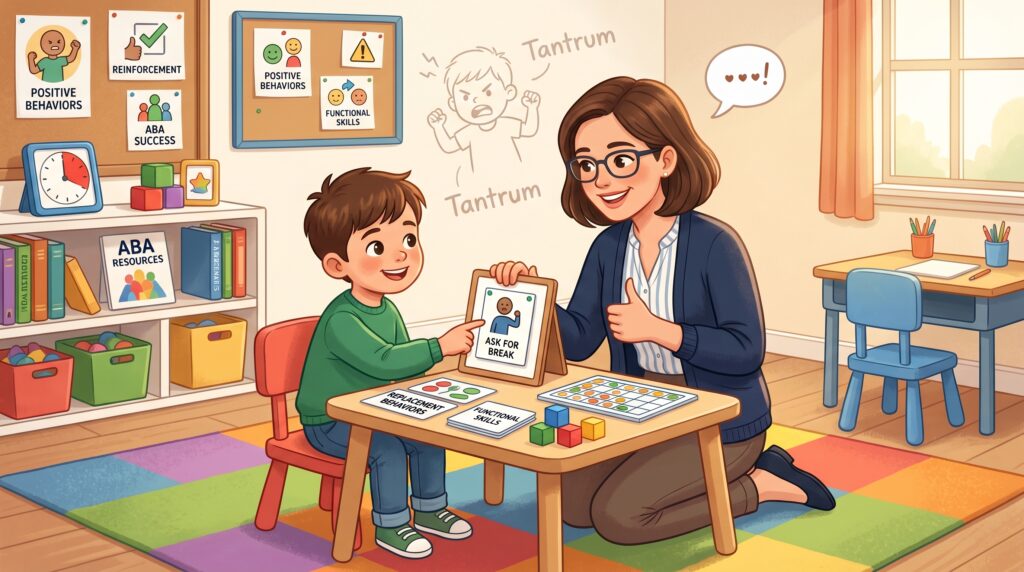
Steps to Create an Effective Behavior Plan at Home
Step 1: Identify Target Behaviors
The first step is to clearly identify which behaviors you want to address. These should be specific actions that are causing distress or difficulty in daily life. For example, if your child frequently throws tantrums when asked to clean up toys, “tantrumming” would be one target behavior.
Step 2: Collect Baseline Data
Collecting baseline data means observing and recording the frequency, duration, and circumstances surrounding these behaviors before any intervention is put in place. This helps you understand how often the behavior occurs naturally and under what conditions it tends to happen.
For instance:
- Frequency: How many times does the child throw a tantrum each day?
- Duration: How long do these tantrums typically last?
- Antecedents: What happens right before the tantrum (e.g., being told to clean up toys)?
Step 3: Develop Strategies Based on Function
Understanding why your child engages in certain behaviors is crucial. A behavior’s function refers to its purpose or what the child gets from it. Common functions include:
- Escape/Avoidance: The child wants to avoid a non-preferred activity (e.g., cleaning up toys).
- Attention Seeking: The child seeks attention, either positive or negative.
- Access to Tangibles: Wanting an item or activity they can’t have at the moment.
Once you’ve determined the function of the behavior, you can develop strategies that address it. For example:
- Escape/Avoidance: Provide choices and set clear expectations for short activities followed by breaks.
- Attention Seeking: Teach replacement behaviors (e.g., asking for help) and respond to positive behaviors rather than negative ones.
- Access to Tangibles: Implement a token economy system where the child earns tokens or points for engaging in desired behaviors, which can then be exchanged for preferred items.
Understanding demand avoidance in autism is particularly valuable, as many children use avoidance behaviors strategically to escape non-preferred tasks.
Step 4: Set Measurable Goals
Setting clear goals helps track progress over time. Your goals should be specific, measurable, attainable, relevant, and time-bound (SMART). For instance:
- “Reduce the frequency of tantrums by 50% within one month.”
- “Increase the child’s engagement in non-preferred activities to twice daily.”
Step 5: Implement Consistently
Implementing your behavior plan consistently is crucial for success. Here are some tips:
- Set Up a Routine: Establish regular times and places for implementing strategies.
- Use Visual Supports: Create charts or schedules that outline tasks, rewards, and routines.
- Model Desired Behaviors: Demonstrate the appropriate ways to handle situations.
Step 6: Monitor and Adjust
Regularly review your data collection sheets to see if changes are occurring. If your child’s behavior hasn’t improved after a few weeks, consider making adjustments. Perhaps tweak strategies or revisit the identified functions of behaviors.

Common Mistakes to Avoid
- Focusing Only on Punishment: Punitive measures often exacerbate problematic behaviors rather than address their underlying causes.
- Ignoring Positive Behaviors: Neglecting to reinforce positive actions can diminish motivation and engagement in beneficial routines.
- Rushing Through Steps: Taking the time to thoroughly understand baseline data, functions of behavior, and implementing changes slowly will yield better long-term results.
Many parents discover that positive reinforcement strategies in ABA therapy are far more effective than punishment-based approaches for building lasting behavioral change.
When to Work with a Professional
While this guide provides foundational knowledge for creating effective behavior plans at home, it’s important to recognize when professional help is needed. Consider consulting a BCBA if:
- You feel overwhelmed or unsure about how to proceed.
- Your child exhibits severe behaviors that are dangerous (e.g., self-injury).
- Progress stalls despite consistent implementation.
A trained professional can offer personalized guidance and ensure your approach aligns with best practices in ABA.
Real-World Tips That Work
- Consistency is Key: Ensure everyone involved in the child’s care understands and follows the plan.
- Positive Reinforcement: Focus on rewarding desired behaviors to increase their frequency.
- Clear Communication: Keep all caregivers informed about progress and any necessary adjustments.
- Patience and Flexibility: Understand that behavior change takes time, and it may require tweaking your approach periodically.
Conclusion
Creating an effective behavior plan at home can be a powerful tool for parents dealing with behavioral challenges. By following the steps outlined above, you can create a tailored intervention that works specifically for your child. Remember, ABA is about understanding the why behind behaviors and addressing those underlying causes. With patience, consistency, and sometimes professional guidance, you can help make significant improvements in your child’s behavior and overall well-being.